Timing matters for more than your calendar. Asphalt laid in good weather compacts tighter, bonds to the base better, and holds up longer than the same mix poured on a cold or wet day. Get the timing wrong and you're paying for a shorter-lived driveway.
The Temperature Requirement
Hot Mix Asphalt must be placed and compacted while it's hot. The minimum ambient temperature for standard HMA paving is 50°F (10°C) and rising. Below that, the surface and subgrade steal heat from the mix too quickly, the asphalt stiffens before proper compaction is achieved, and the result is a surface with too many air voids.
That "and rising" part is the catch. Paving at 50°F in the morning with temps climbing into the mid-60s beats paving at 55°F when the afternoon is headed for 45.
At 45°F, a standard HMA mix typically has a compaction window of under 30 minutes. A competent crew can still do good work, but margins are thin and any delays become costly to quality.
Optimal Season by US Region
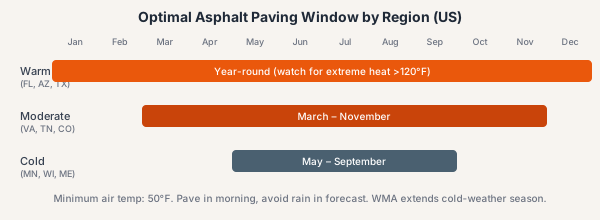
Warm climates (Florida, Arizona, Gulf Coast, Southern California): Paving is possible year-round. The main concern in summer is extreme heat. When ambient temperatures exceed 120°F, asphalt can stay soft long after installation and is susceptible to rutting from vehicle loads. Schedule paving for early morning during heat waves.
Moderate climates (Virginia, Tennessee, Colorado, Pacific Northwest): The window runs roughly March through November. Spring and fall are the sweet spots: mild temperatures extend the compaction window and contractors are often available. Summer works but can mean longer wait times for busy paving crews.
Cold climates (Minnesota, Wisconsin, Maine, Michigan, upstate New York): The practical window is May through September. Fall paving is possible through October in a good year, but early cold snaps and ground freeze get more likely every week. Northern state highway departments usually won't let you pave at all once daytime temps stop holding above 40°F.
Best Months for Most Homeowners
May–June and September–October are the best months to pave in the majority of US climates. Here's why:
Weather: Mild temperatures (55–75°F), lower chance of rain, and lower wind speeds create the best conditions for compaction.
Contractor availability: Paving crews are busy from June through August. Spring and fall often mean faster scheduling and sometimes better pricing as contractors look to fill their books.
Post-installation cure: Asphalt placed in fall has all winter to cure (under cold-weather conditions, the binder hardens thoroughly) and is ready for heavy spring traffic in ideal shape.
Weather Conditions to Avoid
Rain: Don't pave if rain is expected within 2 hours of completion. Water on a fresh asphalt surface disrupts bonding and can cause delamination of the surface course. Most reputable contractors won't pave if rain is forecast.
Ground frost: Paving over frozen ground is problematic. As the ground thaws, it settles and moves, deforming the fresh asphalt above it. Base preparation on frozen ground is also inadequate.
High winds: Wind accelerates heat loss from the mix surface, reducing the compaction window significantly. Exposed sites with sustained wind above 15–20 mph on marginal temperature days are problematic.
Temperatures above 90°F: Not a problem for installation quality (the mix stays workable), but sealers and tack coat (the bonding layer between lifts) can be affected. Plan post-installation restrictions on vehicle parking during peak heat hours.
How Timing Affects Cost
Summer (peak season): Contractors are busy. Lead times stretch to 3–8 weeks in hot markets. Pricing reflects demand. Don't expect discounts in July and August.
Spring (before peak): April and early May often have shorter lead times. Material prices may be lower as plants haven't hit their peak volume yet.
Fall (winding down): September and October can yield 10–15% better pricing as contractors work to fill their fall schedules before the season ends. This is when to ask for competitive bids.
Late fall / winter: Possible in warm climates. In northern states, contractors willing to work in marginal conditions may offer significant discounts, but installation quality risk increases.
Planning Your Project
- Calculate your material needs first. Know your tonnage before reaching out to contractors. Use our asphalt quantity calculator to determine how many tons your project requires.
- Get quotes in early spring. Do this before peak season, when contractors are responsive and pricing is competitive.
- Schedule the work for May–October in most US locations, targeting a week with no rain in the 48-hour forecast.
- Book in advance for summer installation. Popular paving contractors in suburban markets can be booked 4–6 weeks out from June through August.
Warm Mix Asphalt for Extended Season
If you need paving done in late October or early November in a northern climate, ask contractors about Warm Mix Asphalt (WMA). Produced at lower temperatures, WMA stays workable at ambient temperatures of 40–45°F and can be installed successfully when standard HMA would be marginal.
WMA costs $5–$15 per ton more than HMA, but the same density and compacted thickness specs apply. The tonnage calculation doesn't change. Our asphalt calculator handles WMA at the same density as HMA (145 lbs/ft³).
For a breakdown of all asphalt types and their production methods, see our hot mix vs. cold mix asphalt guide.