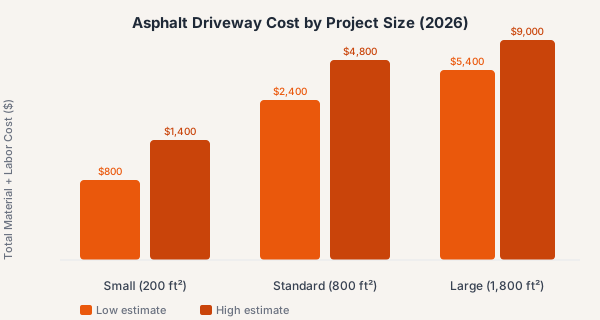
A standard asphalt driveway runs $3 to $7 per square foot installed. It's a wide range, and here's why: a compact 200 sq ft single-car pad might land at $800, while a large double-wide at 1,800 sq ft can hit $9,000 or more. Four things swing the price: size, thickness, region, and site conditions.
What You're Actually Paying For
Material and labor don't split evenly on an asphalt job. Here's a rough breakdown of where your money goes:
Material (asphalt itself): Hot Mix Asphalt runs $80–$150 per ton depending on your region and current oil prices (asphalt is a petroleum product, so prices track crude). A standard 40×20 driveway at 3 inches needs roughly 14.5 tons of HMA. That's $1,160–$2,175 in material alone. Use our asphalt tonnage calculator to get the exact figure for your dimensions.
Base preparation: If you're paving from bare ground, expect to pay for grading, compaction, and 4–6 inches of crushed stone base. This adds $1–$3 per square foot and is non-negotiable. Skipping the base is the #1 reason asphalt driveways fail early.
Labor: Paving labor runs $2–$4 per square foot in most US markets. Bigger jobs get better rates per square foot because the crew setup time is fixed regardless of driveway size.
Equipment: The paving machine, roller, and delivery truck are baked into the contractor's quote. You won't see them itemized, but they're why minimum job charges exist. Most contractors won't mobilize for under $1,000–$2,000.
Price by Driveway Size
Here are realistic 2026 installed prices for full-replacement asphalt driveways (material + base prep + labor):
| Size | Square Feet | Approximate Cost |
|---|---|---|
| Single car, short | 200 ft² | $800 – $1,400 |
| Standard single car | 400 ft² | $1,200 – $2,800 |
| Standard double car | 800 ft² | $2,400 – $4,800 |
| Large double with pad | 1,200 ft² | $3,600 – $7,200 |
| Long estate driveway | 2,000+ ft² | $6,000 – $14,000+ |
These assume a straightforward flat or gently sloped site with no major drainage work. Steep grades, soft soil, or access restrictions add cost.
Thickness Affects Both Cost and Longevity
The thickness you choose has a direct impact on both tonnage and durability. Residential driveways typically spec at 2–3 inches of compacted HMA. Here's what changes when you go thicker:
A 40×20 driveway at 2 inches requires about 9.7 tons of HMA. At 3 inches, that's 14.5 tons. At 4 inches, it's 19.3 tons. At $100–$150 per ton, that's a $480–$1,440 difference in material cost alone between 2" and 4" specs.
The 3-inch spec is the sweet spot for most residential driveways. It handles passenger vehicles and light trucks without issue, and adds meaningful life versus the cheaper 2-inch install. If you park a loaded pickup or have regular delivery vehicle traffic, step up to 4 inches.
Run the numbers for your project with our driveway asphalt calculator before talking to contractors.
What Drives Prices Up
Oil prices: Asphalt cement is a refinery byproduct. When crude goes up, HMA prices follow within weeks. Material prices quoted in spring 2025 may be notably different in fall 2026.
Region: Labor rates vary dramatically. Rural Midwest markets often come in at $3–$4/sq ft installed. Coastal markets and high-cost cities frequently hit $6–$8/sq ft.
Access: A driveway a truck can't pull into adds cost. Wheelbarrow work, pump trucks, and manual labor add to the quote fast.
Removal of existing pavement: Ripping out old concrete or asphalt and disposing of it adds $1–$3 per square foot depending on thickness and local disposal fees.
Drainage work: If you need catch basins, grading for runoff, or retaining walls, those are separate line items.
What Drives Prices Down
Timing: Early spring and late fall are slower for paving contractors. Some offer 10–15% discounts to fill their schedule. Summer is peak season. Don't expect deals.
Getting multiple quotes: Prices vary by 30–40% between contractors for the same job. Three quotes minimum is worth the time it takes.
Existing base: If you're resurfacing over a solid existing asphalt or concrete base, you skip base prep costs. A 1.5–2 inch overlay over sound material runs $2–$4 per square foot installed.
Larger projects: The per-square-foot rate drops as jobs get bigger because fixed costs (mobilization, setup) spread across more area.
Material Cost vs. Total Installed Cost
The estimate our asphalt cost calculator produces is material only: the tonnage multiplied by your price per ton. This is the number to use when getting supplier quotes or checking whether a contractor's material line seems reasonable.
Total installed cost is typically 2–3× the material cost once you add labor, equipment, and base work. If a contractor quotes you $4,500 installed for a job where material works out to $1,800, that's a reasonable margin. If the installed quote is $8,000 for the same job, ask for a detailed breakdown.
Should You DIY Asphalt?
Full asphalt installation isn't realistically DIY. You need a hot mix delivery truck (the material starts cooling the moment it leaves the plant), a vibratory roller for compaction, and experience reading the material. A poorly compacted driveway fails within 2–3 years.
What you can DIY: patching potholes with Cold Mix or bagged repair compound, applying sealcoat every 3–5 years, and crack filling with rubberized crack filler. These maintenance tasks extend driveway life significantly and are genuinely accessible to homeowners.
The right approach: hire a qualified contractor for installation, learn to maintain it yourself. Read our guide on asphalt driveway maintenance for the full maintenance schedule.