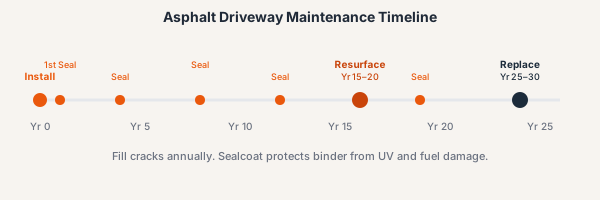
A well-maintained asphalt driveway lasts 25–30 years. A neglected one falls apart in 10–15. The difference isn't luck. It's three recurring maintenance tasks: sealcoating, crack filling, and knowing when to resurface.
Why Asphalt Needs Maintenance
Asphalt is a mixture of aggregate (gravel and sand) held together by a bitumen binder. The binder is what gives asphalt its flexibility and water resistance. Over time, UV radiation oxidizes the binder, making it brittle. Water infiltrates cracks and softens the base layer. Fuel spills and de-icing chemicals dissolve the surface binder.
Sealcoating creates a barrier against all three. It doesn't rebuild deteriorated asphalt. Once the surface is crumbling, sealing doesn't help. But applied to a surface in good condition, it dramatically slows deterioration.
The Maintenance Schedule
Year 1: First Sealcoat
Wait 6–12 months after installation before the first sealcoat. Fresh asphalt needs time to cure and off-gas the oils in the binder. Sealing too early traps those oils and can cause the surface to stay soft.
Apply a coal tar or asphalt emulsion sealer. Coal tar has better chemical resistance, and asphalt emulsion is more environmentally friendly. Both work. Follow the manufacturer's drying time (typically 24 hours minimum before vehicle traffic).
Cost: $0.10–$0.20/sq ft DIY, $0.25–$0.50/sq ft professionally applied.
Every 3–5 Years: Sealcoat
Reapply sealer every 3–5 years depending on traffic, climate, and surface condition. In northern climates with road salt exposure, 3 years is the better interval. In moderate climates with light traffic, 5 years is fine.
Signs you've waited too long: the surface looks gray instead of black, fine surface cracks are visible, and water no longer beads on the surface but soaks in.
Don't apply sealer over existing sealer that's peeling or flaking. Clean it off first. A pressure wash and a few days of drying is sufficient for normal prep.
Annually: Crack Filling
Walk the driveway each spring and fall. Fill any cracks wider than a hairline with rubberized asphalt crack filler. For cracks under 1/2 inch wide, a liquid rubberized filler in a squeeze bottle or caulk gun works well.
Crack filling costs $5–$20 in materials and 30 minutes. Skipping it costs an eventual resurfacing or full replacement when water infiltrates the cracks, saturates the base, and causes the surface to sink, heave, or come apart.
Do not seal a cracked driveway without filling the cracks first. Sealer bridges hairline cracks temporarily but won't hold over larger ones.
Year 15–20: Resurfacing (Overlay)
By year 15–20 on a well-maintained driveway, the original surface has weathered significantly. Even with sealcoating, the aggregate may be exposed, and surface texture is rough. At this point, a 1.5–2 inch asphalt overlay extends the life by another 10–15 years.
Resurfacing works when the structural base and existing asphalt are still sound. There should be no major cracking that goes to the base, no soft spots, or areas of significant deformation. If the base has failed, an overlay won't help; you need full removal and replacement.
Cost: $1.50–$3.00/sq ft for an overlay vs. $4–$7/sq ft for full removal and replacement.
Use our asphalt calculator to estimate how many tons of material a 1.5-inch overlay over your driveway would require. This is useful for getting accurate quotes.
Year 25–30: Replacement Decision
At 25–30 years, most residential asphalt driveways have reached the end of their useful life. The base may be compromised, the surface will have significant cracking, and the cost-benefit of further repair typically doesn't pencil out.
Signs the driveway needs full replacement rather than repair: alligator cracking (interconnected cracks forming a pattern like alligator skin), sinkholes or soft spots, extensive drainage problems, or sections that have completely separated from the base.
For advice on whether to repair or replace, see our guide on when to repave your asphalt driveway.
DIY vs. Professional Maintenance
DIY tasks:
- Crack filling (any homeowner can do this)
- Sealcoating (straightforward with a squeegee or spray system)
- Small pothole patching with Cold Mix
Professional tasks:
- Resurfacing (requires paving equipment)
- Major pothole repair (saw-cut, remove, replace with HMA)
- Base repair
Most sealcoating and crack filling is well within DIY territory. The materials are inexpensive and widely available. The main requirements are decent weather (above 50°F, no rain in the forecast for 24–48 hours) and a clean, dry surface.
Sealcoating Dos and Don'ts
Do:
- Apply when temps are 50°F or above and rising
- Apply in dry weather with no rain for at least 24 hours after
- Use a squeegee or broom for even coverage
- Apply two thin coats rather than one heavy coat
Don't:
- Seal within 6 months of installation
- Seal over cracked or deteriorated surfaces without fixing first
- Apply in hot direct sun (causes premature drying and poor adhesion)
- Drive on it within 24 hours
The Cost of Not Maintaining
A driveway installed today for $5,000 that receives proper maintenance over 25 years might cost another $1,500–$2,500 in sealcoating, crack filling, and a mid-life overlay. Total: $6,500–$7,500 over 25 years.
The same driveway with no maintenance may need full replacement at year 15, costing another $5,000–$8,000. Total: $10,000–$13,000 over 25 years.
Maintenance is worth doing.