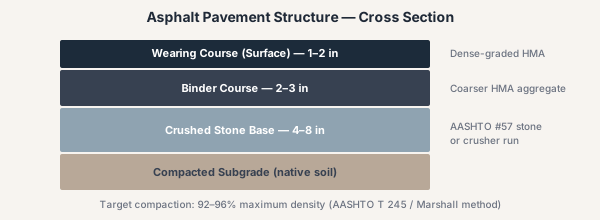
Asphalt placed without proper compaction has too many air voids. Water gets in, the binder oxidizes faster, and the surface deteriorates years ahead of schedule. Compaction isn't a finishing detail. It's the step that determines whether a paving job lasts 5 years or 25.
What Is Compaction?
When hot asphalt is delivered and laid by a paving machine, it contains 15–20% air voids. Rolling the material with a vibratory steel drum roller forces the aggregate particles together, reducing those voids to the target range of 3–7%.
The goal is 92–96% of maximum theoretical density (MTD). This is the industry standard per AASHTO T 245 and the Marshall mix design method, which the Asphalt Institute publishes as part of its MS-2 manual. Most state DOT specifications use this same target.
Hitting below 92% leaves too many air voids. Above 96% can actually over-compact some mixes, causing them to shove (push laterally) under traffic.
Why It Affects Tonnage Calculations
The density values used in asphalt tonnage calculations are 145 lbs/ft³ for HMA and WMA. These are compacted densities. This is important: you're calculating the weight of material after it has been properly rolled down to specification.
Before compaction, the same material weighs roughly 115–125 lbs/ft³. If a contractor laid material at that loose density and you calculated tonnage using the compacted density, you'd estimate you need less than you actually do.
Our asphalt calculator uses compacted density values throughout. The tonnage figure it produces is what you need delivered in loose form: the material that will compact down to fill your target volume at specification density.
The Rolling Process
Proper compaction requires the right equipment, the right timing, and the right number of passes.
Breakdown rolling: The first pass immediately behind the paving machine, while material is still hot (above 250°F). A vibratory 10–12 ton steel drum roller is standard. This is when most compaction occurs.
Intermediate rolling: A rubber-tired pneumatic roller follows, working the surface further while it's still warm (200–250°F). The combination of steel and pneumatic rolling achieves more uniform compaction than either alone.
Finish rolling: Final passes with a static steel roller to smooth the surface and eliminate roller marks. This happens as the material cools toward 175°F.
Temperature is critical throughout. Asphalt stiffens as it cools. Once it drops below about 175°F, compaction becomes increasingly difficult and ineffective. This is why paving in cold weather is risky: wind and low temperatures can cool the surface faster than the roller can work.
The Compaction Window
Time between delivery and compaction is limited. A standard asphalt delivery truck insulates the material, but it's still losing temperature at 8–10°F per minute on a cool day. Practical compaction window:
- 80°F+ ambient, low wind: 90–120 minutes
- 60°F ambient, light wind: 45–60 minutes
- Below 50°F ambient: Not recommended for standard HMA without WMA additives
Warm Mix Asphalt (WMA), produced at lower temperatures, extends the compaction window. This is another reason it's specified for long-haul projects or late-season paving.
Compaction Testing
Commercial and municipal paving jobs require compaction testing to confirm spec compliance. The most common method is a nuclear density gauge: a device placed on the fresh surface that measures density in real-time. Cores (physical samples cut from the completed pavement) are also used for verification testing in the lab.
Residential driveways rarely include formal compaction testing. This is one of the quality assurance gaps in residential paving. An experienced contractor knows what properly compacted asphalt looks and feels like. The roller leaves no visible impression when making a final pass on cooled material.
For homeowners: ask your contractor what compaction equipment they'll use and how many passes they plan. A contractor who mentions roller passes and mix temperature understands the process; one who doesn't may be cutting corners.
Why Base Compaction Matters Too
The aggregate base under asphalt needs its own compaction before paving. A base compacted to 95–100% of its Proctor density provides a stable, load-distributing platform. A loose, under-compacted base allows the asphalt to deflect, which leads to cracking and rutting.
If your contractor skips base compaction testing on a commercial project, that's a red flag. For residential work, a well-equipped contractor with a plate compactor and experience can achieve adequate base compaction by feel and inspection.
What Poor Compaction Looks Like
Signs of insufficient compaction in the years after installation:
- Rutting: wheel-path depressions from vehicle loads pushing into soft asphalt
- Shoving: lateral displacement in front of stop areas or driveways with slopes
- Early surface cracking from oxidation (accelerated by high void content)
- Rough, aggregate-protruding texture (surface never sealed properly)
If you're seeing rutting within 3–5 years of a fresh installation, insufficient compaction is a likely cause. Unfortunately, there's no simple fix. The surface usually needs to be milled and replaced.
How Compaction Connects to Your Project
When you calculate asphalt tonnage for a project, you're calculating the material needed to fill a compacted volume. The quality of compaction then determines whether that volume and the performance you paid for are actually delivered.
A properly compacted 3-inch driveway is genuinely 3 inches of dense, load-bearing pavement. A poorly compacted one might measure 3 inches but perform more like 2.
Use our asphalt tonnage calculator to get the right quantity for your project, and make sure you work with a contractor who treats compaction as a priority, not an afterthought.
For related reading on asphalt types and how they affect density, see our asphalt types guide.